
What Should You Ask a Breeder About Puppy Socialization?
Last Updated: October 30, 2026
Quick Summary
Ask a breeder to describe specific puppy socialization practices, such as what a typical day looks like, how they introduce new sounds, surfaces, and people, and what handling puppies get before pickup. Listen for detailed routines rather than vague claims, and ask to see where the puppies are raised.
The socialization window runs roughly 3 to 16 weeks of age, so breeder handling matters before pickup.
Keep exposure sessions short, five to ten minutes, and end each one on a calm note.
Do one new thing at a time instead of stacking a new place, people, and sound together.
A puppy that recovers from a surprise in under 30 seconds is showing healthy confidence.
Skip dog parks and pet-store floors until the vaccine series is complete.
Table of Contents
Why Puppy Socialization Is the Most Important Thing You'll Do
Puppy socialization is the process of exposing a young dog to new people, animals, places, sounds, and handling in a calm, positive way during its first months of life.
That's why the questions you ask a breeder about puppy socialization practices matter before you ever bring a dog home. Early experiences set the tone for everything that follows.
Here's the part most buyers miss: socialization doesn't start when you get home. It starts in the breeder's nursery, weeks before pickup.
The Critical Period: 3 to 16 Weeks
The socialization window is a stretch of puppy development, roughly 3 to 16 weeks of age, when a puppy's brain is most open to new experiences.
By the time a puppy is 8 weeks old and ready for a new home, part of that window is already gone. That's why a breeder's early handling and gentle exposure matter so much.
A common mistake is assuming you have all the time in the world. You don't. The window closes fast.
Questions to Ask a Puppy Breeder About Socialization
The best way to judge a breeder's socialization practices is to ask direct questions and listen for specific answers. Vague replies ("oh, they're great with kids") tell you little. Detailed ones tell you a lot.
Use these questions to ask a puppy breeder as your starting point:
What does a typical day look like for your puppies?
How do you introduce new sounds, surfaces, and people?
Are puppies raised indoors, in a home, or in a separate building?
Listen for specifics. A breeder who can describe routines, not just results, is usually doing the work. The American Veterinary Medical Association's guidance on puppy behavior backs this up: early, positive experiences shape a dog's lifelong temperament.
Your Puppy Socialization Timeline, Stage by Stage
A puppy socialization timeline helps you plan exposure without overwhelming a young dog. The goal is steady, positive progress at the puppy's pace, not a packed calendar. What most timelines leave out is the part that actually matters: how to tell when a puppy is ready to move to the next stage, and what to do when it isn't.
Talent Hounds
Here's a practical stage-by-stage view, with observable readiness cues for each step.
3 to 5 weeks (breeder's nursery): Gentle handling, mild household sounds, and stable surfaces. Puppies at this age are still with the litter, so the breeder does the work. Ask what handling happens daily and whether puppies are exposed to different textures and voices.
5 to 8 weeks (breeder's home): Short, supervised introductions to different people, floor surfaces, and safe household noises. This is also when many breeders begin crate and potty-routine exposure. Readiness cue: puppies approach a novel object within a minute or two and recover from a dropped pan within seconds.
8 to 12 weeks (homecoming): Calm introductions to family members, the home routine, and one or two known, vaccinated adult dogs. Keep sessions short, five to ten minutes, and end on a calm note. Readiness cue: your puppy takes treats from a new person, explores a new room with a loose body, and recovers from a doorbell within a minute.
A few practical rules keep the timeline honest:
One new thing at a time. Don't stack a new place, new people, and a new sound in the same session. If something goes wrong, you won't know which variable caused it.
Short and frequent beats long and rare. Three five-minute sessions across a week do more than one hour-long outing.
Track it. A simple notebook or phone note with the date, the exposure, and a one-word rating (calm, cautious, overwhelmed) turns a vague plan into a progress record you can actually use.
Watch Out If your puppy freezes, tucks its tail, refuses treats, or tries to bolt during an exposure, you've moved too fast. Back up to a greater distance, lower the intensity, and try again another day. Slowing down is better than overwhelming a puppy.
For Bernedoodle owners who want a step-by-step plan, our guide on socializing a Bernedoodle puppy for hiking walks through the process in detail.
Here is the stage-by-stage timeline the article lays out, with the readiness cue for each step.
Age and stage | What happens | Readiness cue |
3 to 5 weeks (breeder's nursery) | Gentle handling, mild household sounds, stable surfaces | Ask what handling happens daily |
5 to 8 weeks (breeder's home) | Short, supervised introductions to people, surfaces, noises | Approaches novel object within a minute or two |
8 to 12 weeks (homecoming) | Calm introductions to family, routine, one or two vaccinated dogs | Takes treats from a new person; recovers from doorbell within a minute |
12 to 16 weeks (puppy class and outings) | Structured puppy classes, more people, clean low-traffic places | Handled by a stranger for a few seconds; walks on three or four surfaces |
4 to 6 months (confidence-building) | Continued positive exposure, new challenges layered in | Offers curiosity before you prompt it; recovers in under 30 seconds |
The Puppy Socialization Checklist: People, Animals, Places, and Handling
A good puppy socialization checklist covers four buckets: people, animals, places, and handling. Hit each one gradually and reward calm behavior with treats and praise.

People: Children, strangers, people in hats, people with strollers.
Animals: Calm adult dogs, and safe, vaccinated pets only.
Places: Car rides, sidewalks, parks, and busy but manageable spaces.
Before the puppy even arrives, a solid puppy arrival preparation checklist makes those first weeks calmer for everyone.
Signs of a Well-Socialized Puppy
The signs of a well-socialized puppy show up in body language, not just behavior. A confident pup recovers quickly from surprises, approaches new things with curiosity, and settles easily.
Watch for these cues, and note roughly how long each one takes:
Relaxed posture and a loose, wagging tail, weight spread evenly, ears neutral, tail loose rather than tucked or stiff.
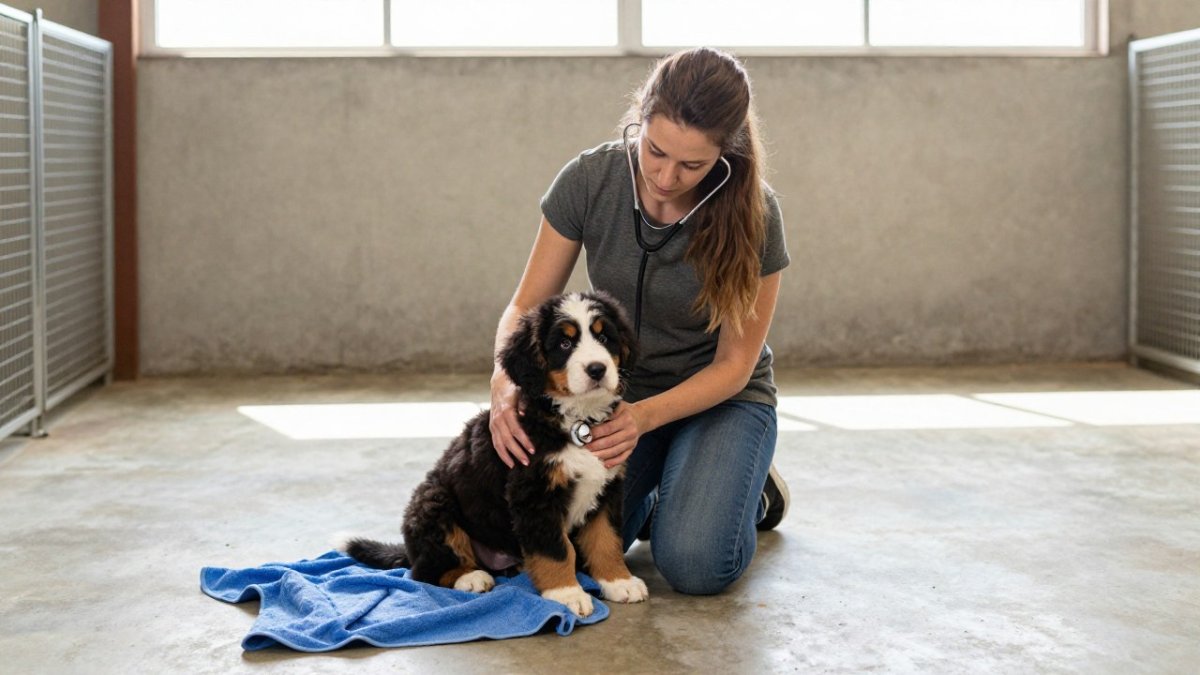
Willingness to be handled, accepts a brief paw, ear, or mouth check from a familiar person without pulling away, and from a stranger within a few seconds.
Quick recovery after a startling noise, returns to normal behavior within about 30 seconds to a minute. A puppy that stays tense for several minutes is telling you the exposure was too intense.
Normal caution vs. a real problem. A brief pause, a lowered head, or a startle at a new sound is normal puppy behavior and not a red flag. What matters is what happens next.
A simple progress tracker. Keep a running log with four columns: date, exposure, recovery time (rough seconds or minutes), and a one-word rating (calm, cautious, overwhelmed). After two or three weeks you'll see patterns, which categories are easy, which ones consistently push your puppy over threshold, and whether recovery times are shrinking. Shrinking recovery times are the clearest evidence that socialization is working. Flat or growing recovery times mean it's time to back up a stage.
When to seek help. If your puppy consistently panics at everyday things, shows fear that worsens rather than improves over a couple of weeks, or has a frightening encounter that seems to stick, talk to your veterinarian. Establishing a consistent structure for exposure during these formative weeks often involves applying the 7-7-7 rule for puppies to ensure that your pet encounters a manageable variety of new experiences without becoming overwhelmed.
Key Takeaway Judge socialization by recovery speed, not by whether your puppy greeted every stranger. A puppy that bounces back in under a minute is doing well, even if it hesitated first.
If a puppy hides, freezes, or panics at mild new things, that's a signal to slow down. Go at the puppy's pace, not yours.
Vaccines, Disease Risk, and Safe Introductions
Vaccination and disease risk are the reason safe introductions need care. Until a puppy's vaccine series is complete, avoid high-traffic dog areas and unknown animals. Your veterinarian should guide the timing.
Safe introductions mean controlled settings: a known, vaccinated adult dog, a quiet friend's home, or a clean, private space. Before you plan a visit, review our Visitations page for our rules and the disease-safety reasoning behind them. The CDC's guidance on keeping pets healthy and your vet are the best sources for what's safe at each stage.
Common Mistakes and What to Do After a Scary Encounter
Even careful owners hit bumps. The most common mistakes are rushing exposure, forcing interaction, and skipping rewards for calm behavior. Another big one: confusing socialization with forced interaction.
If your puppy has a frightening experience, don't panic and don't over-comfort in a way that rewards fear. Stay calm, move away from the trigger, and let the puppy recover. Then reintroduce that trigger slowly, at a distance, with treats for calm behavior.
What to Ask JM Kennels Before You Reserve a Puppy
Bring your questions about puppy socialization practices straight to us. We'd rather you ask now than wonder later. Our puppies are raised in a nurturing environment, microchipped, vaccinated, and dewormed before adoption, and come with health guarantees.
A few things worth asking any breeder, including us:
How are puppies socialized before go-home?
What health testing do the parents receive?
What support do you offer first-time owners?
If you're still comparing breeders, our buyer's guide to what to look for in breeders gives you a broader set of questions to work from. We're licensed through PACFA and produce F1 and F2 Bernedoodles.
Frequently Asked Questions
What should I ask a breeder about puppy socialization?
Ask how many people, children, dogs, and sounds the litter has met before 8 weeks, and request specifics rather than a general 'yes, they're socialized.' Ask what happens during a typical day, whether puppies are raised indoors with household noise, and how the breeder handles a puppy that seems nervous. A good breeder will describe a puppy socialization checklist they follow and tell you exactly what experiences each puppy has had, including handling, car rides, and different floor surfaces.
When should puppy socialization begin?
Socialization starts with the breeder, ideally before 3 weeks, and ramps up between 3 and 16 weeks, the critical period when a puppy's brain is most open to new experiences. By the time a puppy comes home around 8 weeks, the breeder should already have introduced gentle handling, household sounds, and calm people. Your job is to continue that gradual exposure at the puppy's pace, using treats and positive reinforcement, through the rest of the socialization window.
What are the signs of a well-socialized puppy?
A well-socialized puppy approaches new people with curiosity rather than hiding, recovers quickly from a startle, and accepts gentle handling of paws, ears, and mouth without freezing or snapping. Watch body language: relaxed posture, loose tail, soft eyes, and the ability to settle after brief excitement. Ask the breeder how the puppy behaves around children and other dogs, and spend time with the puppy yourself before committing. A puppy that warms up within a few minutes and seeks contact is a good sign.
What should I do if my puppy seems fearful during socialization?
Stop and give the puppy space. Do not force interaction, pick the puppy up to push it toward a stranger, or reassure with a high-pitched voice that can reward fear. Move back to a distance where the puppy can observe calmly, reward any relaxed behavior with treats, and end the session on a positive note. If fear is intense or persists, talk to your veterinarian about a behavior plan. Repeated scary experiences during the socialization window can create lasting fear-based behavior, so slow and positive beats fast and forced.
Finding a breeder who takes socialization seriously is the difference between a nervous puppy and a confident companion. At JM Kennels, we raise Bernedoodle and Mini Bernedoodle puppies with early training, DNA-tested parents, and health guarantees that stand behind every pup. Get started with JM Kennels and bring home a well-socialized companion your family can count on.
Comments