
How Do You Stop a Puppy From Biting and Chewing?
Last Updated: November 5, 2026
Quick Summary
Stop puppy biting by ending play the moment teeth touch skin: yelp, stand up, cross your arms and turn away for ten to twenty seconds, then redirect to a chew toy and praise calm behavior. For chewing, offer puppy-safe toys sized wider than the muzzle and rotate three to five toys every few days.
Puppy biting is social and chewing is physical, so treat them as two separate puzzles.
Teething peaks between roughly three and seven months, when sore gums drive extra nipping.
A frozen puppy-safe toy or chilled washcloth eases sore gums fast; supervise and keep sessions short.
Avoid antlers, hooves, hard bones and ice cubes, which can fracture baby teeth.
Puppies need often 16 to 20 hours of sleep a day, and a tired puppy is a biting puppy.
Table of Contents
Why Puppies Bite, Mouth, and Chew (and What's Normal)
Puppy biting and chewing are normal, developmental behaviors, not signs of a bad dog.
Here's the key insight most new owners miss: biting is social, chewing is physical. Treat them the same and both get worse.
A young puppy mouths to learn bite pressure, to play, and to soothe sore gums. Chewing serves a separate need: teething relief and pent-up energy.
Normal Mouthing vs. Destructive Chewing vs. Concerning Aggression
Most puppy mouthing is gentle and stops when play stops. Destructive chewing targets furniture, shoes, or walls, usually when a puppy is bored or teething. When boredom or teething drives destructive chewing, redirecting your puppy to appropriate chew toys and limiting access to tempting items can help prevent furniture chewing.
Normal mouthing: soft pressure, happens during play, easy to interrupt
Destructive chewing: focused on objects, worse when alone or tired
Concerning aggression: hard bites, guarding, fear-based snapping
If you see the third pattern, talk to your vet or a certified trainer. It's rare in young puppies, but it deserves attention.
Puppy Biting and Teething: What Sore Gums Do to Behavior
Teething turns a calm puppy into a chewing machine. Between roughly three and seven months, a puppy's baby teeth fall out and adult teeth push through.
That's why puppy biting and teething go hand in hand. A puppy that nips more than usual this week may simply have sore gums. Cold helps.
More frequent nipping and mouthing
Drooling or mild gum swelling
Chewing on crate bars, baseboards, or hands
A frozen puppy-safe toy or a chilled washcloth can ease sore gums fast. Keep sessions short and always supervise.
Puppy Biting Training Techniques That Actually Work
Effective puppy biting training techniques share one trait: consistency. Pick a response and use it every single time. Mixed signals teach a puppy that biting sometimes works.
American Standard Dog Training
The goal isn't to punish. It's to teach bite inhibition, the learned ability to control mouth pressure. Puppies learn this from littermates. When one bites too hard, play stops.
Teaching Bite Inhibition and a Gentle Mouth
Let gentle mouthing happen during play, then reward it. When pressure gets hard, end the fun. Over weeks, your puppy learns that a soft mouth keeps the game going and a hard bite ends it.
A common mistake is yelping and then continuing to play. That teaches nothing. The pause is the lesson.
Yelps, Time-Outs, and Rewarding Calm Behavior
A sharp, high-pitched yelp can work as a verbal cue, but only if you follow it with a real break.
Then redirect to a chew toy and praise calm behavior. Reward the gentle play you want to see more of, and the hard bites fade.
First-time owners often want the full training picture. Our first-time puppy owner tips cover everything else you'll face in the first year.
How to Stop a Puppy From Biting Your Feet and Hands
Feet and hands get bitten most because they move like prey. Make them boring and give your puppy something better to chase.
Try this sequence:
Freeze when teeth touch skin. Don't yank away.
Redirect to a toy the moment your puppy lets go.
Reward the swap with praise or a treat.
Repeat every time, without exception.
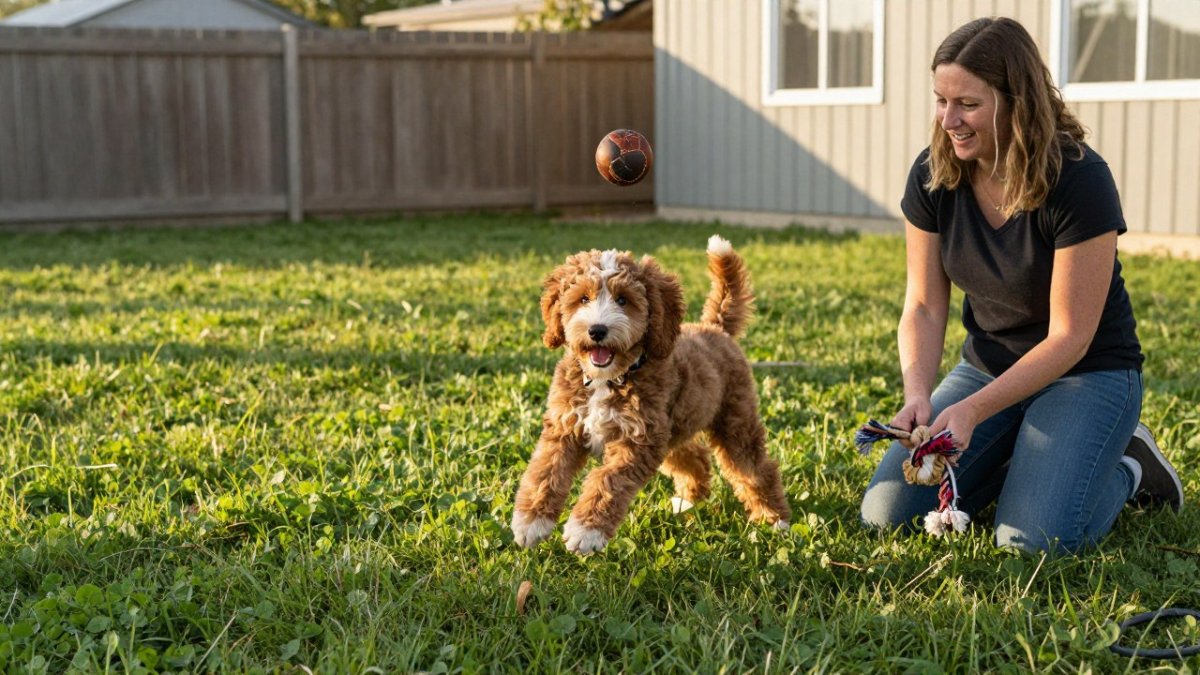
For ankle-biters, keep a tug toy in your pocket. When your puppy lunges, offer the toy instead of your shoe. Over a week or two, most puppies learn that hands and feet end play while toys start it.
Puppy-Safe Chew Toys: How to Choose and Rotate Them

The best puppy-safe chew toy is one your puppy can't swallow, can't shred into pieces, and actually wants to chew. Most owners get one of those three wrong, and that's when toys become hazards or get ignored.
Match the Toy to Your Puppy's Size and Chewing Style
Size is the first filter. A toy should be large enough that your puppy cannot fit it fully into the back of the mouth, where it can lodge against the roof of the mouth or slide toward the throat.
Chewing style matters just as much. Watch how your puppy chews for a day or two:
Gnawers work one spot slowly and apply steady pressure. They do well with firm rubber and flexible nylon.
Shredders bite, pull, and try to tear pieces off. They need tougher rubber with no seams, no fabric, and no squeaker they can extract.
Chompers bite hard and fast, then lose interest. They often prefer textured rubber or toys you can stuff, which keep them working longer.
A toy that's too hard can crack baby teeth. One that's too soft gets shredded and swallowed. The sweet spot is firm but with visible give when you press a thumbnail into it.
Durability, Choking Risk, and What to Avoid
Durability is not the same as safety. A toy can survive weeks of chewing and still be dangerous if it wears into sharp edges, splits, or sheds small pieces. Inspect every toy weekly and toss anything that fails.
Use these selection criteria:
Size: big enough that your puppy can't swallow it, and wider than the muzzle
Material: rubber or flexible nylon for teething puppies; avoid rigid plastic
Texture: firm but with some give, never rock-hard
Watch out: avoid antlers, hooves, hard bones, and ice cubes for young puppies. They're tough enough to fracture baby teeth or chip an adult tooth as it erupts, and hard chews are a common cause of slab fractures in puppies under six months.
Rotation That Actually Keeps a Puppy Interested
Rotation matters as much as selection. Keep three to five toys out and swap them every few days; novelty keeps a puppy interested, and a bored puppy chews furniture.
Wash toys regularly, especially rubber and nylon, and inspect them each time you rotate. A toy that has been chewed hard for a week can develop edges you didn't see on day one.
Cold and Frozen Options for Teething
Cold helps sore gums, but not every frozen toy is safe. A frozen puppy-safe rubber toy or a chilled washcloth works well. Soak a clean washcloth, wring it out, twist it, and freeze it; supervise the whole time so your puppy doesn't chew off and swallow a corner.
Keep sessions short, always supervise, and put frozen toys away once they soften. The goal is relief, not a marathon chew session.
When Techniques Fail: A Troubleshooting Guide
If nothing seems to work, the problem is usually inconsistency, overstimulation, or an unmet need. Puppies don't bite to annoy you; they bite because something is driving the behavior.
Run through this checklist:
Problem | Likely Cause | Fix |
Biting gets worse in the evening | Overtired puppy | Enforce a nap in a quiet area |
Nipping during play only | Overstimulation | Shorten sessions, add breaks |
Chewing everything in sight | Teething or boredom | More chew toys, more exercise |
Biting continues after time-outs | Inconsistent response | Pick one response, use it every time |
A tired puppy is a biting puppy. When play escalates, offer a calm break before it spirals.
If a technique isn't working after two weeks of consistency, change one variable at a time. Patience beats intensity here.
A Household and Child-Safety Plan for Biting Season
Kids and puppies bite each other's excitement buttons. A house-wide plan keeps everyone safe while training takes hold, and it works best when every adult in the home follows the same rules.
Supervision That Actually Works
Supervision means active eyes on both the child and the puppy, close enough to intervene before teeth touch skin. Scrolling on the couch while a toddler and puppy share the floor is not supervision.
Use a simple two-zone setup:
Puppy zone: a crate, pen, or gated room with a chew toy and water, where the puppy can rest without being bothered
Kid zone: a couch, playpen, or gated area where the puppy cannot reach
Rotate between together time and separate time throughout the day. Puppies need far more sleep than most families expect, often 16 to 20 hours a day, and a rested puppy bites less.
Teaching Children What to Do
Children learn best from short, rehearsed actions, not lectures. Practice these three moves before the puppy comes home and again during the first weeks:
Stand like a tree. Feet still, arms crossed, eyes up, no screaming or running. Movement triggers chasing and nipping.
Offer a toy, not a hand. Keep a tug toy or plush toy within reach in every room and show kids how to hold it out at arm's length.
Walk away slowly. If the puppy keeps biting, the child walks to the other side of a gate or onto a couch, without running.
Role-play these moves with your child using a stuffed animal before involving the puppy. Kids who have practiced are far more likely to use them when teeth touch skin.
Watch out: never let a child punish, swat, or yell at the puppy. A child who becomes scary teaches the puppy to fear hands and faces, which can make nipping worse and create a lifelong aversion to children.
Rules for the Whole Household
Supervise all puppy-child time, every time, no exceptions for "gentle" puppies.
Never leave a child alone with a puppy, even for a minute, even in a fenced yard.
Keep toys and chews within easy reach in every room so redirecting is fast.
Vulnerable Household Members
Older adults, people with mobility limits, and anyone with thin skin or a bleeding disorder face higher risk from puppy teeth, which can scratch and break skin even in play.
Parents often ask whether these dogs suit family life. Our guide on whether Bernedoodles are good for families answers that directly. If you're still setting up your home, our puppy arrival checklist covers the full prep list.
Bringing Home a Bernedoodle Puppy From JM Kennels
Training starts before your puppy comes home. At JM Kennels, we raise our Bernedoodle and Mini Bernedoodle puppies in a nurturing environment with early training. Every puppy is microchipped, vaccinated, and dewormed, and comes with health guarantees.
For the rest of your training plan, our guide on how to potty train and crate train a Bernedoodle puppy pairs well with this one. And when you're ready to meet your match, you can browse available Bernedoodle puppies for sale in Colorado.
Frequently Asked Questions
Do puppies grow out of biting and chewing?
Most puppies do, but only with guidance. Puppy biting usually peaks during teething, around 3 to 6 months of age, and fades as adult teeth settle in and bite inhibition improves. Destructive chewing often continues into adolescence if puppies are never taught what to chew instead. Consistent redirection to puppy-safe chew toys, calm responses to nips, and rewarding gentle play speed the process up. Without training, some dogs carry mouthy habits into adulthood.
How long does it take to teach a puppy not to bite?
Expect weeks, not days. Puppy biting training techniques work gradually: most puppies show clear improvement in bite pressure within 2 to 4 weeks of consistent daily practice, while reliable gentle behavior around hands and feet often takes until 5 to 7 months of age. Progress depends on age, breed, teething stage, and how consistently every family member responds. Track small wins, like softer mouthing and faster calming, rather than waiting for a single breakthrough day.
My 7-month-old puppy is still biting me. What should I do?
Biting at 7 months is usually overstimulation, leftover teething discomfort, or a habit that got reinforced. Check the basics first: enough naps in a quiet area, daily chew time with appropriate toys, and an immediate end to playtime after any hard bite. If biting happens mostly in the evening, add a calm wind-down routine. If it escalates to growling, snapping, or guarding, work with a certified trainer or your veterinarian to rule out pain and build a behavior plan.
How can I stop my puppy from biting my hands and feet?
Keep toys within reach so you can redirect before teeth touch skin. When a nip lands, say a short high-pitched yelp or verbal cue, pause play for a few seconds, and offer a puppy-safe chew toy instead. For feet biting, stop moving, stand still like a tree, and reward the moment your puppy disengages. End playtime with a brief time-out if biting continues. Everyone in the house must respond the same way, every time, so the rules stay clear.
Puppy biting and chewing test every new owner's patience, but the fix is simpler than it feels: stay consistent, meet your puppy's needs, and reward the behavior you want. JM Kennels raises calm, well-socialized Bernedoodles and supports families through every stage. Get started with JM Kennels and bring home a puppy set up for a lifetime of gentle, confident companionship.
Comments