
How to Prepare for Puppy Arrival: A Complete Checklist
Table of Contents
One Week Before: Preparation Timeline
Essential Supplies and Shopping Checklist
Puppy-Proofing Your Home Room by Room
Kitchen and Dining Areas
Living Spaces and Bedrooms
Bathroom and Laundry Areas
Where Should a Puppy Sleep the First Night
New Puppy Checklist: Food, Bowls, and Feeding Setup
Introducing a Puppy to Another Dog
Veterinary Care and Health Preparation
First 72 Hours: Settling Your Puppy In
Frequently Asked Questions
Last Updated: October 11, 2026
One Week Before: Preparation Timeline
To prepare for puppy arrival, you need a solid plan. Timing matters.
Days 7-5 Before Arrival:
Order or purchase all supplies (food, bowls, crate, bedding, toys, collar, leash)
Puppy-proof your home room by room
Set up a designated sleeping area
Schedule your first veterinary appointment for within 48 hours of arrival
Days 4-2 Before Arrival:
Prepare your home's safe zones with puppy gates
Stock your first-aid kit with pet-safe supplies
Gather vaccination records and health documents from the breeder
Plan your feeding schedule and potty-training routine
Day 1 - Arrival Day:
Keep the day calm and quiet
Introduce your puppy to their designated sleeping area first
Offer water and a small meal
Let them explore at their own pace
A structured timeline reduces stress for both you and your new puppy.
Essential Supplies and Shopping Checklist
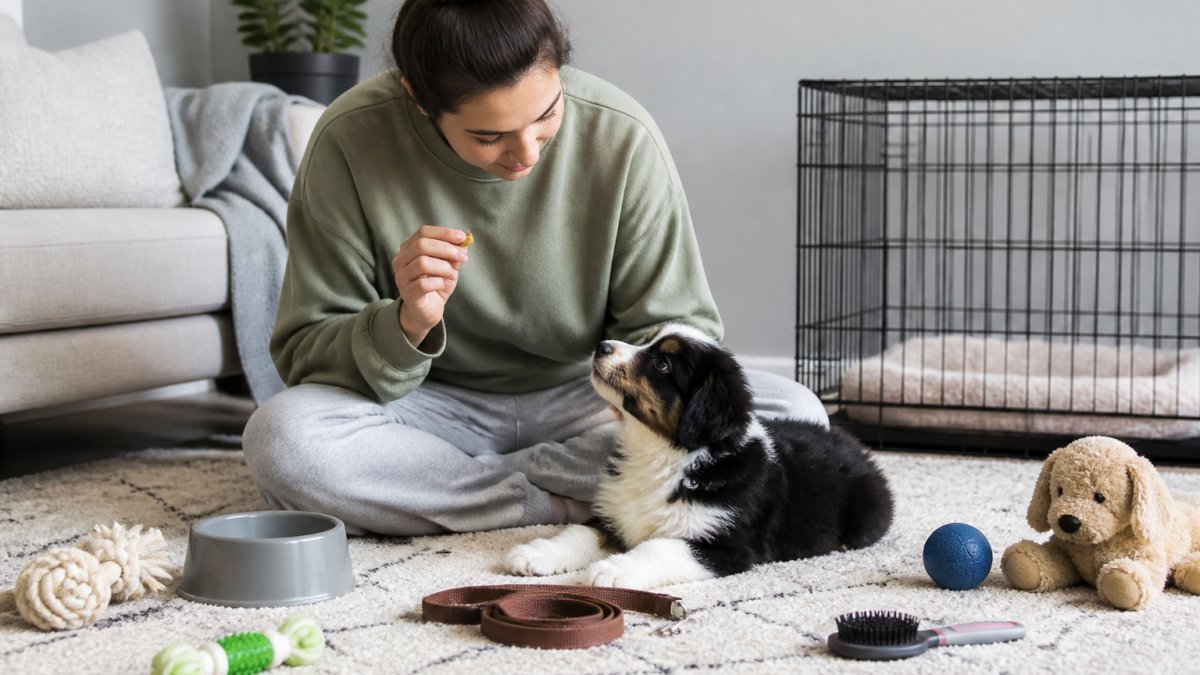
Here's what every household should have ready to prepare for puppy arrival.
Food and Water:
High-quality puppy food (ask your breeder which brand they use)
Stainless steel or ceramic food bowl
Separate water bowl
Food storage container with airtight lid
Crate and Sleeping Setup:
Appropriately sized crate (puppy should stand, turn, and lie down comfortably)
Soft bedding or crate pad
Dog bed for other areas of your home
Blanket for comfort and security
Collar, Leash, and Identification:
Adjustable puppy collar (you'll need to size up as they grow)
4-6 foot leash for walks and training
Identification tag with your phone number
Microchip (JM Kennels provides this before delivery)
Toys and Enrichment:
Chew toys appropriate for puppies
Soft toys for comfort
Puzzle toys for mental stimulation
Rope toys for interactive play
Grooming and Health Supplies:
Puppy shampoo (gentle formula)
Soft brush or comb
Nail clippers or grinder
First-aid kit with pet-safe supplies
Safety and Containment:
Puppy gates for doorways
Playpen or exercise pen
Cleaning enzymatic cleaner for housebreaking accidents
Training Essentials:
Training treats (small, soft pieces work best)
Clicker for positive reinforcement
Training guide or manual
Start with essentials and add items as you learn your puppy's preferences.
Puppy-Proofing Your Home Room by Room
Systematic room-by-room checks prevent accidents and give your puppy a safe environment to explore.

Kitchen and Dining Areas
The kitchen is the most dangerous room for puppies.
Remove or secure:
Trash cans (use locking containers or keep behind closed doors)
Cleaning supplies and chemicals (store in high cabinets)
Medications and vitamins
Chocolate, grapes, raisins, onions, and xylitol (all toxic to dogs) (People Foods to Avoid Feeding Your Pets)
Safe practices:
Keep puppy out of the kitchen during meal prep
Never leave food unattended on counters or tables
Use baby gates to block kitchen access when needed
Store food in sealed containers on high shelves
Living Spaces and Bedrooms
Living areas need attention, puppies chew furniture, eat plants, and swallow small objects.
Remove or secure:
Houseplants (many are toxic; research each plant you own)
Electrical outlets (use safety covers)
Electrical cords (hide behind furniture or use cord covers)
Small objects like coins, buttons, or batteries
Cushions and pillows with removable stuffing
Safe setup:
Provide designated chew toys in each room
Use furniture covers if needed
Block access to spaces under furniture where they could get stuck
Keep bedroom doors closed if you have areas you want to restrict
Bathroom and Laundry Areas
Bathrooms and laundry rooms contain toxic substances harmful to puppies.
Remove or secure:
Medications and supplements (store in medicine cabinets)
Cleaning products and disinfectants
Toilet bowl cleaners
Laundry detergent and fabric softener
Shampoos and personal care products
Safe practices:
Keep bathroom and laundry room doors closed
Use baby gates if your puppy needs limited access
Store all chemicals in locked cabinets
Never leave cleaning supplies on floors or low shelves Securing these hazardous areas is a foundational step that works in tandem with gathering the proper essential puppy supplies to ensure your home remains a sanctuary for your new companion.
Where Should a Puppy Sleep the First Night
The first night is critical. Your puppy has left their mother and littermates and needs comfort and security.
Petopedia
The best sleeping location is a crate placed in your bedroom. Your puppy feels less alone, you can hear potty needs, and the crate becomes their safe den.
Setup for the first night:
Place the crate within arm's reach of your bed
Line it with soft bedding
Leave the door open initially so your puppy can explore
Place a comfort item inside (something that smells like their littermates, if possible)
Use a white noise machine or soft music to mask household sounds
What to expect:
Your puppy will likely cry or whimper
Resist picking them up every time they cry (this teaches them crying gets attention)
If they need to potty, take them out immediately and praise heavily
Return them to the crate and stay calm
The crate is their bedroom and safe place, a secure puppy sleeps better and adjusts faster.
New Puppy Checklist: Food, Bowls, and Feeding Setup
Correct feeding sets your puppy up for healthy growth.
Food transition:
Ask your breeder what food your puppy has been eating and continue it for at least the first week
If switching brands, do it gradually over 7-10 days: 75% old/25% new (days 1-3), 50/50 (days 4-6), 25% old/75% new (days 7-9), then fully switch
Feeding schedule for young puppies:
8-12 weeks old: 4 meals per day
3-6 months old: 3 meals per day
6+ months old: 2 meals per day
Bowl setup:
Use stainless steel or ceramic bowls (avoid plastic, which can harbor bacteria)
Place bowls on a mat to contain spills
Keep food and water bowls separate
Wash bowls daily with hot soapy water
Refill water throughout the day
Portion control:
Follow the feeding guidelines on your puppy food bag
Adjust based on your puppy's body condition
Your puppy should have a visible waist and you should feel their ribs without pressing hard
Avoid overfeeding, which causes joint problems and obesity
Treats and training:
Use small training treats (pea-sized pieces)
Treats should be less than 10% of daily calories
Avoid table scraps and human food
Offer praise and affection as rewards too
Consistent feeding schedules help with potty training, feed at the same times daily for a predictable bathroom routine.
Introducing a Puppy to Another Dog
If you have an existing dog, careful introduction planning prevents lasting tension.
Before the puppy arrives:
Ensure your adult dog is up-to-date on vaccinations
Assess their temperament honestly
If they show aggression toward other dogs, consult a professional trainer before bringing a puppy home
Exercise your adult dog thoroughly before introduction
The introduction process:
Keep the puppy in a carrier or behind a baby gate initially
Let your adult dog sniff and investigate at their own pace
Watch for signs of stress or aggression in either dog
Keep the first meeting brief (5-10 minutes)
Separate them and repeat several times over the first few days
Managing the relationship:
Never leave them unsupervised until you're confident they're safe together
Feed them in separate rooms to avoid food guarding
Provide each dog with their own toys, bed, and space
Give your adult dog extra attention so they don't feel replaced
Redirect any aggressive behavior immediately
Red flags:
Stiff posture or raised hackles
Growling or snapping
Pinning the puppy to the ground
Refusing to allow the puppy near food or toys
If your adult dog shows these signs, stop the introduction and consult a professional trainer. Some dogs aren't suitable housemates for puppies.
Veterinary Care and Health Preparation
Schedule your puppy's first veterinary appointment for within 48 hours of arrival.
First veterinary visit:
Bring health records from the breeder
Have a complete health examination
Discuss vaccination, flea/tick/heartworm prevention, deworming, and microchip verification
Vaccination timeline:
Puppies typically receive their first vaccines at 6-8 weeks old
Follow-up vaccines are given every 3-4 weeks until 16 weeks old
Rabies vaccine is required by law in most states
Your vet will recommend a schedule based on your puppy's age and health status
Parasite prevention:
Puppies are vulnerable to fleas, ticks, and intestinal parasites
Your vet will recommend appropriate preventive medications
Deworming typically happens at 2, 4, 6, and 8 weeks old
Heartworm prevention begins after testing
Flea and tick prevention can start as early as 6-8 weeks depending on the product
Health guarantees from JM Kennels: Each puppy comes with comprehensive health guarantees covering genetic conditions. Our 72-hour guarantee allows you to have your puppy examined by your own veterinarian. The one-year and two-year guarantees cover specific hereditary health issues.
Building a relationship with your vet:
Choose a vet before your puppy arrives
Ask for recommendations from other dog owners
Discuss breed-specific health concerns and emergency care options
Regular veterinary care prevents serious health problems and catches issues early.
First 72 Hours: Settling Your Puppy In
The first three days determine adjustment success and require patience, consistency, and calm handling.
Day 1, Arrival:
Keep the environment quiet and calm
Introduce crate and sleeping area first
Offer water immediately and take outside to potty within 30 minutes
Offer a small meal 2-3 hours after arrival
Limit visitors and handling
Day 2, Adjustment:
Continue the same feeding schedule
Take your puppy outside after eating, drinking, playing, and napping
Praise enthusiastically when they potty outside
Introduce different rooms gradually and keep play sessions short (10-15 minutes)
Begin basic handling (paws, ears, mouth) for grooming prep
Day 3, Routine Building:
Stick to the same schedule
Schedule your veterinary appointment if you haven't already
Introduce family members one at a time
Start basic training (sit, come) with treats
Continue potty breaks every 2-3 hours
Common challenges in the first 72 hours:
Crying and whining: This is normal. Your puppy misses their littermates.
Accidents in the house: Expect them. Never punish.
Not eating: Some puppies are too stressed to eat immediately.
Excessive energy or lethargy: Both are normal during adjustment.
Sleep disruption: Your puppy's internal clock is off.
Potty-training foundation:
Take your puppy outside first thing in the morning
Go out after every meal (usually 15-30 minutes after eating)
Go out after naps
Go out after playtime
Go out before bedtime
Frequently Asked Questions
What supplies do I need before bringing a new puppy home?
Your new puppy checklist should include food and water bowls, age-appropriate puppy food, a crate or bed for sleeping, a collar and leash, identification tag, puppy-safe toys, grooming supplies, and cleaning products for accidents. You'll also want a puppy gate to restrict access to certain areas, waste bags, and a first-aid kit. Check with your breeder about the specific food your puppy has been eating to ensure a smooth transition.
How do I puppy-proof my home before arrival?
Puppy-proofing your home means removing hazards and securing dangerous items. Secure electrical cords, remove poisonous plants, lock up medications and cleaning supplies, cover trash cans, and secure toilet lids. Check for small objects your puppy could swallow, block access to stairs, and remove anything with toxic materials. Install puppy gates to limit access to certain rooms. Get down on floor level to spot hazards from your puppy's perspective.
Where should a puppy sleep the first night in a new home?
Most puppies do best sleeping in a crate or designated bed in your bedroom for the first night. This allows your puppy to feel secure near you while establishing a safe sleeping space. The crate should be appropriately sized, large enough to stand and turn around, but not so large your puppy can eliminate in one corner and sleep in another. Place soft bedding inside and keep the space calm and quiet to help your puppy settle.
How do I introduce my new puppy to another dog?
Introduce your puppy to another dog slowly and in a neutral space when possible. Keep both dogs on leashes initially and allow them to sniff each other. Watch for signs of stress or aggression and separate them if needed. Keep early interactions short and positive, gradually increasing time together. Feed them separately and supervise all interactions for the first few weeks. Your existing dog may need extra attention to prevent jealousy. Consider consulting a trainer for personalized guidance.
Bringing home a new puppy is one of life's great joys. Preparation transforms that joy into a smooth, confident transition. Use this timeline and checklist to set yourself and your puppy up for success from day one. At JM Kennels, we're here to support you throughout this journey. Our team is always available to answer questions about your puppy's health, temperament, and development. Reach out anytime, we want your new family member to thrive.
Puppy Inquiry
Comments