
How to Hike With Bernedoodle Puppies Safely
Last Updated: October 26, 2026
Quick Summary
Bernedoodle puppy hiking success depends on age, size, and skeletal maturity, with puppies not ready for serious trail work until their bones and joints fully develop around 12-18 months. Start with short flat walks at 5 minutes of exercise per month of age twice daily, then gradually introduce gentle trails once your puppy handles 30-minute walks comfortably.
Puppies 8-16 weeks should only do short indoor play and 10-15 minute flat leash walks, not hiking.
Follow the 5 minutes of exercise per month of age guideline, twice daily, for safe conditioning.
Introduce easy trails under 1 mile on flat or gently rolling terrain starting around 6-12 months old.
Watch for fatigue signs like limping, excessive panting, or reluctance to continue and stop immediately.
Increase distance by no more than 10-20% per week and avoid rocky, steep, or technical terrain for puppies under 12 months.
Table of Contents
Understanding Bernedoodle Puppy Energy Level for Hiking
Bernedoodle puppy hiking success depends on age, size, and individual temperament. These intelligent, affectionate dogs inherit the Bernese mountain dog's endurance and the poodle's trainability, making them excellent hiking companions once they mature. However, puppies are not ready for serious trail work until their bones and joints fully develop.
Bernedoodles typically display moderate to high energy. They thrive on physical activity and mental stimulation. Without adequate exercise, they can become destructive or anxious. Understanding your puppy's energy level helps you plan safe, enjoyable hikes that build conditioning without causing injury.
A puppy's readiness for hiking depends less on enthusiasm and more on skeletal maturity. This guide walks you through realistic timelines, warning signs, and practical steps to introduce your Bernedoodle puppy to the trail safely.
Bernedoodle Exercise Needs by Age
Your puppy's exercise needs change dramatically as they grow. Overexertion in early months can damage developing joints. Underexertion can lead to behavioral problems. The key is matching activity to age and size.
Puppies 8 to 16 Weeks Old
Puppies this young should not hike. Their bones are still largely cartilage. Growth plates won't close until 12-18 months (longer in larger dogs). Heavy exercise now increases injury risk later.
Focus instead on:
Short, frequent play sessions indoors (5-10 minutes at a time)
Gentle leash walks on flat ground (10-15 minutes, 2-3 times daily)
Socialization in safe, controlled environments
Mental stimulation through training and puzzle toys
These young puppies have bursts of energy followed by long naps. This pattern is normal and healthy. Let them rest when tired.
Puppies 4 to 6 Months Old
At this stage, puppies can handle slightly longer activities. They're still growing rapidly, so caution remains essential.
Safe activities include:
Leash walks on flat terrain (20-30 minutes, once or twice daily)
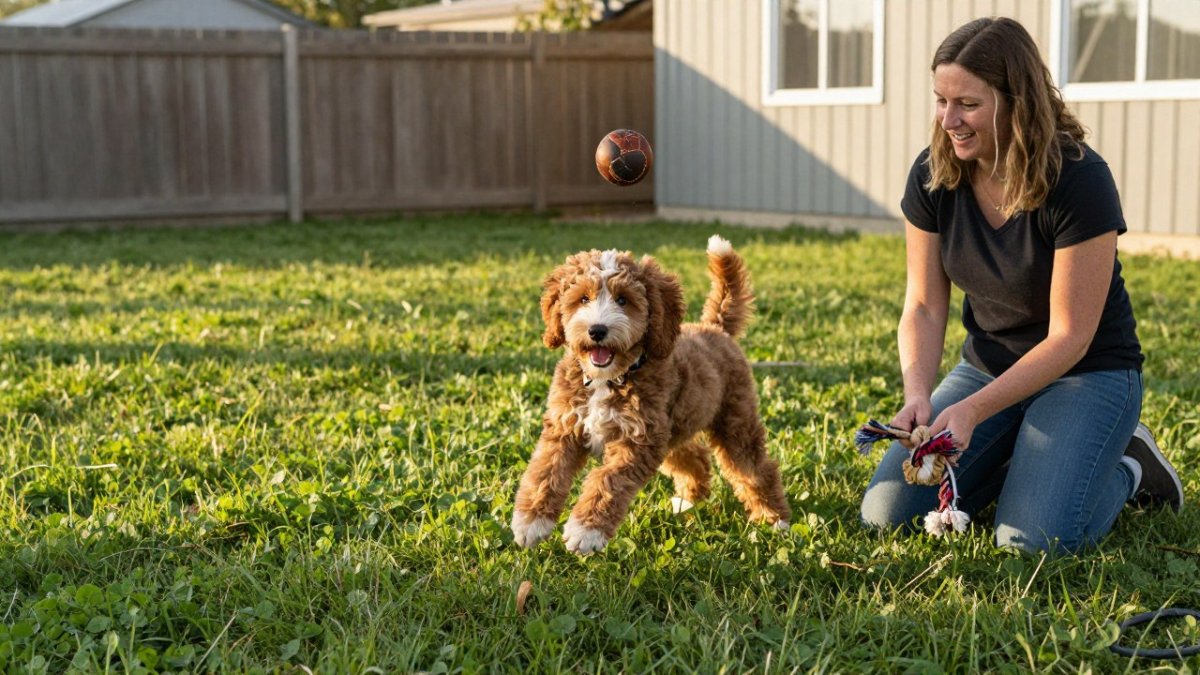
Gentle play in fenced yards
Basic obedience training (short sessions, high rewards)
Controlled socialization on easy trails (flat, short distances only)
Avoid hills, jumping, and repetitive impacts. A good rule: no more than 5 minutes of activity per month of age, twice daily. A 4-month-old puppy can handle about 20 minutes of structured exercise.
Puppies 6 to 12 Months Old
Puppies in this range show increasing stamina and strength. Growth is still occurring, but more slowly. This is when you can begin introducing gentle trail work.
Appropriate activities:
Leash walks on mild terrain (30-45 minutes, once daily)
Short, easy hikes on flat or gently rolling trails (under 1 mile)
Swimming (excellent low-impact exercise)
Fetch and retrieval games on soft surfaces
Continued training and impulse control work
Always watch for signs of fatigue.
Bernedoodle puppies have different exercise capabilities at each stage of growth.
Age Range | Safe Activities | Duration | Key Limitation |
8 to 16 weeks | Short indoor play, gentle leash walks on flat ground | 5-10 min play, 10-15 min walks | Bones still largely cartilage |
4 to 6 months | Leash walks on flat terrain, basic training, easy trails | 20-30 min walks, once or twice daily | No hills, jumping, or repetitive impacts |
6 to 12 months | Mild terrain walks, short easy hikes, swimming, fetch | 30-45 min walks, under 1 mile hikes | Growth still occurring, watch for fatigue |
Bernedoodle Puppy Walking Duration and Daily Activity
Daily walks are the foundation of a healthy routine. They provide physical exercise, mental stimulation, and socialization opportunities. Walking also strengthens the bond between you and your puppy.
The general guideline: puppies need 5 minutes of exercise per month of age, twice daily.
Walking frequency matters as much as duration. Two shorter walks are better than one long one for puppies. They also help with house-training and allow for bathroom breaks.
Vary your walking surfaces. Soft ground (grass, dirt) is gentler on developing joints than concrete. Mix flat walks with slightly hilly terrain as your puppy matures. This builds leg strength gradually.
Watch your puppy's behavior during walks. A puppy that pulls hard, refuses to move, or limps is telling you something. Pulling suggests excess energy; refusing to move or limping suggests fatigue or pain. Adjust accordingly.
Building a Gradual Hiking Conditioning Plan
Introducing your Bernedoodle puppy to hiking requires patience and a structured approach. A gradual conditioning plan builds positive associations with trails.
Month 1: Short Leash Walks on Flat Terrain
Start with neighborhood walks on pavement or packed dirt. Keep these walks short (15-20 minutes for 4-6 month puppies, 25-30 minutes for 6-12 month puppies). The goal is building endurance, not distance.
Choose quiet routes with minimal distractions. This lets your puppy focus on the walk and practice leash manners. Reward calm walking with praise and treats. This teaches your puppy that hiking is rewarding. Consistent reinforcement during these early outings prevents the development of puppy leash pulling and establishes the foundation for a lifetime of enjoyable trail adventures.
Introduce a lightweight collar or harness designed for puppies. Make sure it fits snugly without chafing. Practice putting it on and taking it off at home before walking in public.
Watch for signs of fatigue: panting, lagging behind, sitting down frequently, or reluctance to continue. These are signals to shorten your next walk.
Month 2: Gentle Trails and Mild Elevation
Once your puppy handles 30-minute flat walks comfortably, introduce easy trails for Bernedoodle puppy hiking. Choose well-maintained paths with minimal elevation gain. Avoid rocky terrain, steep drops, or technical footing.
Start with 1-2 mile hikes on flat or gently rolling trails. Bring water and take frequent breaks. Your puppy should be able to sit, rest, and drink without showing excessive panting or distress.
At this stage, your puppy is learning what hiking means. Keep these hikes short and positive.
Watch for limping, reluctance to continue, or excessive panting. These signal that you've gone too far. Scale back next time.
Month 3 and Beyond: Progressive Trail Difficulty
Increase distance gradually: add no more than 10-20% distance per week. Increase elevation gradually: add mild hills before tackling steep climbs. Increase terrain difficulty: move from packed dirt to rocky, rooted, or technical footing slowly.
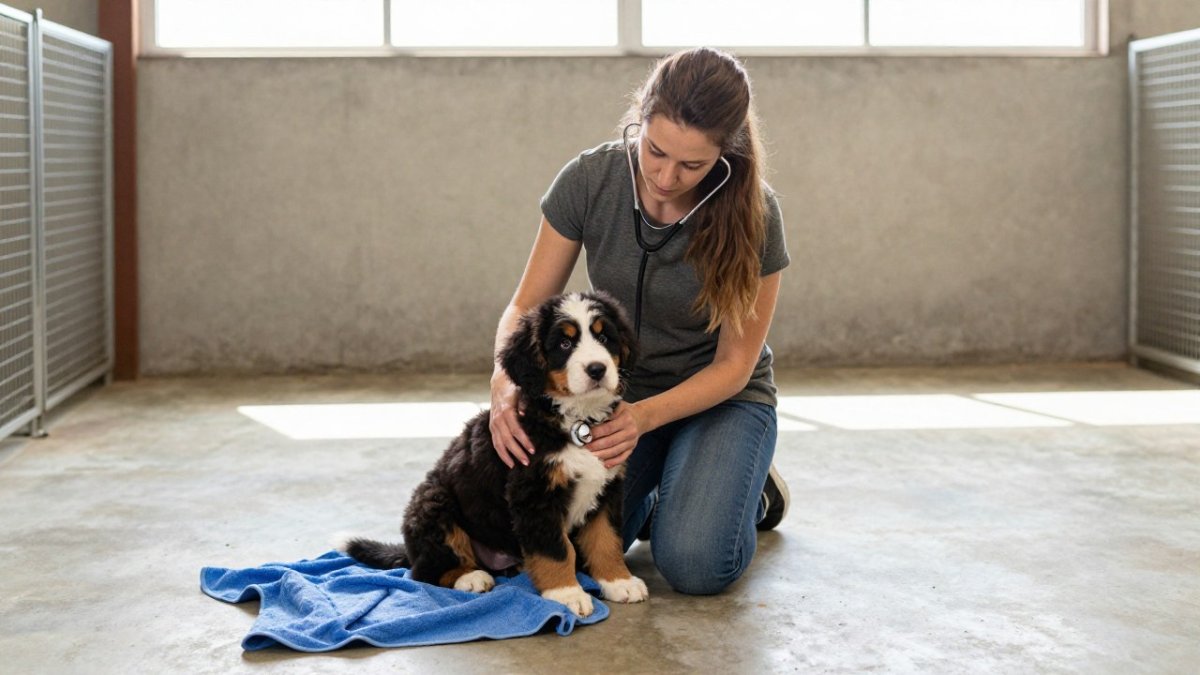
Remember: individual variation is significant. Some puppies mature faster than others. Genetics, nutrition, and individual health all play roles. Your veterinarian can assess your puppy's specific readiness.
Recognizing Signs of Puppy Overexertion on the Trail
Watch out: Limping, reluctance to bear weight, or favoring a leg during or after a hike are signs to stop hiking and contact your veterinarian. Do not continue the same activity level.
Other warning signs include:
Excessive panting or difficulty catching breath
Refusal to continue walking or frequent sitting
Stiffness or soreness the next day
Behavioral changes like increased irritability or anxiety
Loss of appetite or lethargy after exercise
Essential Bernedoodle Hiking Gear and Trail Preparation
Proper gear makes hiking safer and more enjoyable for you and your puppy. It also protects your puppy from environmental hazards.
Gear Checklist for Puppy Hikes
Essential items for every hike:
Collar or harness fitted properly (snug but not tight)
6-foot leash (longer retractable leashes are risky on trails)
Water bottle or hydration pack (for you)
Collapsible water bowl or bottle with built-in bowl (for your puppy)
Waste bags (pack out what you pack in)
ID tag with current phone number
Microchip registration up to date (JM Kennels puppies arrive microchipped)
Optional but helpful items:
Booties for rocky terrain or extreme temperatures
Lightweight backpack for your puppy (only for older, larger puppies)
First aid kit (bandages, antiseptic, tweezers for splinters)
Insect repellent safe for dogs
Sunscreen formulated for dogs (on exposed noses and paw pads)

Weather and Terrain Considerations
On hot days (above 75°F):
Hike early morning or evening only
Choose shaded trails near water
Take frequent breaks in shade
Bring extra water
Watch for heat exhaustion signs
Cold weather presents different challenges. Puppies lose body heat quickly. Short-haired or thin-coated puppies are especially vulnerable. On cold days, limit hike duration and watch for shivering or reluctance to move.
Terrain affects joint stress. Rocky, rooted, or steep terrain increases injury risk. For puppies under 12 months, stick to well-maintained trails with minimal technical footing. Packed dirt and grass are ideal. Avoid scree, boulder fields, and steep drop-offs.
Check trail conditions before you go. Use local hiking apps or contact the ranger station. Avoid trails with recent storm damage, downed trees, or hazardous conditions.
Size Differences: Mini Versus Standard Bernedoodles on the Trail
Mini and standard Bernedoodles have different hiking capabilities. Size affects endurance, joint stress, and heat regulation.
Both sizes benefit from the same graduated conditioning plan. Start short and flat. Progress gradually. Watch for fatigue signals.
To understand size differences between Bernedoodle types, read our detailed comparison guide. This resource breaks down how size affects hiking suitability and helps you plan appropriate adventures for your specific puppy.
Preparing Your Bernedoodle Puppy for Your First Hike
Your first hike sets the tone for your puppy's relationship with trails. Make it positive, manageable, and fun.
Before the hike:
Choose a short, easy trail (under 1 mile for puppies under 12 months)
Check weather and trail conditions
Gather all necessary gear
Ensure your puppy is well-rested and fed 2-3 hours before the hike
Practice leash walking at home if your puppy is new to it
During the hike:
Start early, before your puppy gets tired
Take frequent breaks (every 15-20 minutes for young puppies)
Offer water at each break
Keep a positive tone; make it fun, not a forced march
Watch your puppy's body language constantly
Stop if your puppy shows fatigue, pain, or anxiety
After the hike:
Offer water and a light snack
Check paws for cuts, thorns, or burrs
Clean muddy paws and dry thoroughly
Let your puppy rest
Observe for limping or soreness over the next 24 hours
To prepare comprehensively for puppy arrival, review our complete checklist. This guide covers everything you need to know before bringing your Bernedoodle puppy home, including health records, vaccinations, and initial training.
For foundational information about Bernedoodles and their characteristics, explore our FAQ section. New owners benefit from understanding breed traits, energy levels, and what to expect as your puppy grows.
Starting your Bernedoodle puppy on the trail is an exciting milestone. The key is patience. A gradual conditioning plan, careful attention to fatigue signals, and appropriate gear set your puppy up for a lifetime of hiking adventures. At JM Kennels, our puppies arrive vaccinated and microchipped, giving you a strong foundation for this journey. Begin with short, flat walks. Progress slowly. Watch your puppy carefully. The reward is a confident, healthy adult dog ready to explore the mountains with you.
Frequently Asked Questions
When can a Bernedoodle puppy start hiking?
Always consult your veterinarian before introducing your Bernedoodle puppy to hiking.
How long should a Bernedoodle puppy hike?
Always watch your puppy for signs of fatigue and be ready to cut the hike short if they show signs of overexertion or discomfort.
How can I tell if my Bernedoodle puppy is tired or overexerted on a hike?
If you notice signs that concern you, contact your veterinarian.
Do Bernedoodles need more exercise as they grow?
Bernedoodles have moderate to high energy levels. Mental stimulation through training, play, and socialization is also part of caring for a Bernedoodle.
Puppy Inquiry
Add bernedoodlesoftherockies.com as a preferred source on Google →
Comments