
7 Early Neurological Stimulation Facts Every Puppy Breeder Should Know
Last Updated: October 25, 2026
Quick Summary
Early neurological stimulation is a short, structured handling routine for newborn puppies: five brief exercises, done once a day during a narrow early window, that gently expose a puppy's nervous system to mild, controlled stress. The window runs from day 3 to day 16 of a puppy's life, with each of the five exercises lasting about five seconds.
Start ENS on day three, not day one or two, and run it daily through day sixteen.
Do one session per day, keep each exercise to five seconds, and always follow the same order.
The five exercises are tactile stimulation, head erect, head down, supine position, and thermal stimulation.
Stop the session if you see continuous crying, rigid limbs, gasping, or a puppy that feels cool.
The original 1970s U.S. Navy research was small, narrow, and short-term, so treat ENS as one small input.
Table of Contents
What Early Neurological Stimulation Actually Is
Where the Protocol Came From
When to Start Puppy Stimulation: The Day 3 to Day 16 Window
The Five ENS Puppy Exercises, Step by Step
1. Tactile Stimulation Between the Toes
2. Head Held Erect
3. Head Pointed Down
4. Supine Position
5. Thermal Stimulation on a Cool Surface
How to Read Stress Signs and When to Stop
What Normal Looks Like
What Distress Looks Like
A Simple Decision Rule
Adapting for Weak, Ill, or Premature Puppies
Watch the Dam, Too
Keep a Simple Record
Early Scent Introduction for Puppies: The Companion Protocol
Puppy Socialization and Development After the ENS Window
What the Research Supports and What It Does Not
What the Original Work Actually Tested
What the Evidence Suggests
Established Findings vs. Breeder Claims
Setting Realistic Expectations
Measure What You Can
Choosing a Breeder Who Handles the First Weeks Well
Frequently Asked Questions
What Early Neurological Stimulation Actually Is
We've used this protocol with our Bernedoodle litters for years and learned where it helps and where the claims outrun the science.
A newborn puppy's nervous system is still forming, and small, safe challenges during that window may help it adapt to change later.
Where the Protocol Came From
The routine traces back to early 1970s U.S. Navy work studying how early handling affected military working dogs, testing whether brief early stress could produce calmer, more adaptable animals.
The program tested newborn puppies with five daily exercises and suggested some benefits in stress tolerance and cardiovascular response. Later writers expanded those findings into a popular breeder practice, sometimes with claims the original work never made.
That history matters. The protocol is real and old. The marketing around it is newer and louder.
When to Start Puppy Stimulation: The Day 3 to Day 16 Window
The window for ENS puppy exercises runs from day 3 to day 16 of a puppy's life.
Run the routine daily through day sixteen; after that, the window closes.
A few rules keep it safe:
One session per day. No more.
Keep each exercise to a few seconds. Five seconds is the common standard.
Do all five in the same order. Consistency matters more than variety.
Skipping days or doubling up to "catch up" defeats the purpose. This is a gentle nudge, not a training program.
The Five ENS Puppy Exercises, Step by Step
Here are the five exercises in order, each lasting about five seconds. Handle the puppy gently and return it to its mother and littermates right after.

1. Tactile Stimulation Between the Toes
Hold the puppy in one hand, head up, and gently tickle the webbing between the toes on one back foot for five seconds. This tactile stimulation step is the gentlest of the five.
2. Head Held Erect
Support the puppy's body and hold it so the head is straight up, perpendicular to the ground. Keep it brief. The puppy should feel supported, never dangling.
3. Head Pointed Down
Reverse the position. Hold the puppy so the head points gently toward the floor, still fully supported. Five seconds. Then bring it back level.
4. Supine Position
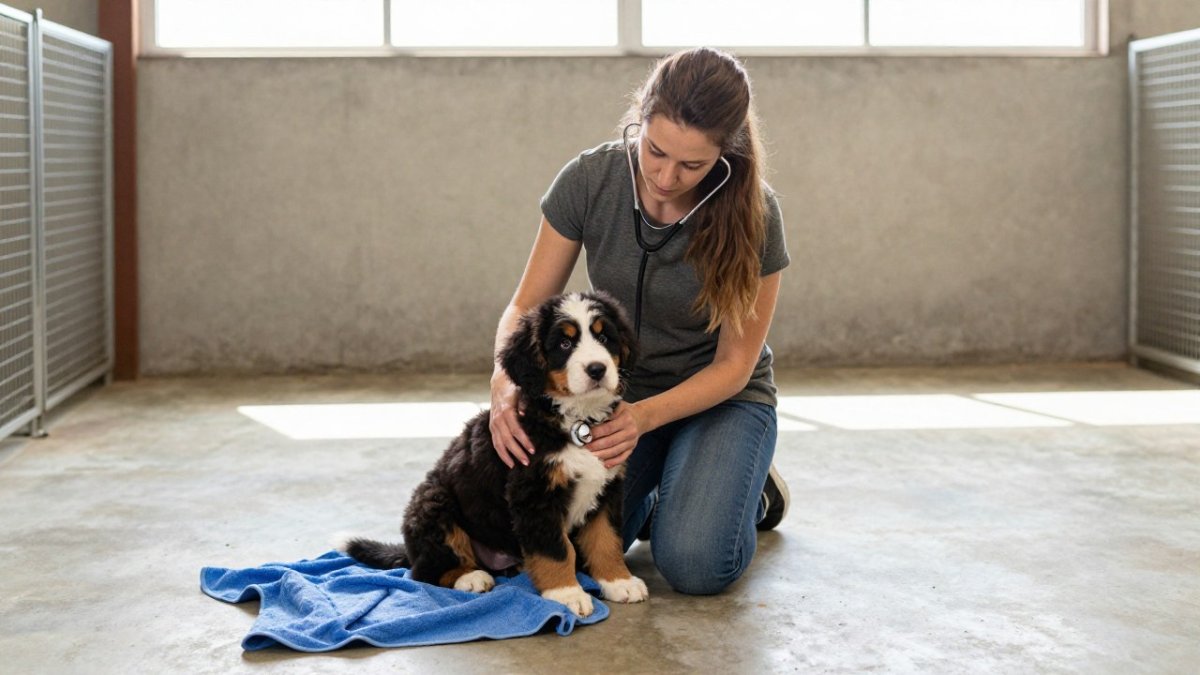
Cradle the puppy on its back in your palm, belly up. This supine position is the one most puppies resist at first. Keep it short and calm.
5. Thermal Stimulation on a Cool Surface
Set the puppy on a cool, smooth surface, like a towel chilled in the fridge, not the freezer. Five seconds of thermal stimulation, then back to the warm box.
The full routine takes under a minute per puppy. That's the whole protocol.
Exercise | What You Do | Duration | Frequency |
Tactile stimulation | Tickle between the toes | 5 seconds | Once daily |
Head held erect | Hold head straight up | 5 seconds | Once daily |
Head pointed down | Tip head gently down | 5 seconds | Once daily |
Supine position | Cradle belly-up | 5 seconds | Once daily |
Thermal stimulation | Cool surface under paws | 5 seconds | Once daily |
How to Read Stress Signs and When to Stop
Most ENS guides tell you to do five exercises for five seconds and move on, but few explain how to tell normal fussing from distress. That gap matters: the protocol only works if the puppy stays calm enough to process the input.
The Retriever Nation
What Normal Looks Like
During a well-tolerated session you should see:
Brief startle, then settle. A puppy may squirm or vocalize for a second when picked up, then relax into your hand.
Loose limbs. Legs and tail stay soft rather than rigid.
Even breathing. No gasping, no open-mouth panting.
Mild fussing is not failure, the goal is a gentle challenge the puppy can absorb, not zero protest.
What Distress Looks Like
Stop the session and return the puppy to the litter if you see any of the following:
Continuous, high-pitched crying that does not settle when the puppy is put down.
Rigid or flailing limbs that stay stiff rather than relaxing.
Gasping, open-mouth breathing, or a blue-tinged tongue or gums.
A common mistake is pushing through because "the chart says five seconds." The chart does not know your puppy. If a puppy is clearly distressed, end the session and try again the next day.
A Simple Decision Rule
Use a three-tier response:
Green, proceed. Puppy settles within a few seconds, limbs loose, breathing even. Complete the five exercises.
Yellow, shorten or skip. Puppy fusses longer than usual, stiffens briefly, or feels cool. Do one or two exercises, then return the puppy to the warmth of the litter.
Red, stop. Any sign of distress from the list above. End the session, warm the puppy, and note it in your records.
If a puppy hits red two days in a row, pause the routine and consult your veterinarian before continuing.
Adapting for Weak, Ill, or Premature Puppies
Not every puppy should run the full protocol. Consult a veterinarian before starting ENS on any puppy that is:
Premature or significantly underweight for the litter.
Struggling to nurse or gain weight.
Showing signs of illness, diarrhea, vomiting, lethargy, or labored breathing.
For these puppies, the priority is warmth, hydration, and nutrition. Gentle handling during routine care, weighing, cleaning, positioning for nursing, already provides some tactile input. Many practitioners defer formal ENS until the puppy is stable, then run a shortened version.
Watch the Dam, Too
An anxious or protective dam can transfer tension to the litter. Work when she is calm with you near the box, keep sessions short, and never handle newborns away from a warm heat source for long. If she becomes agitated, return the puppy immediately and try again later.
Keep a Simple Record
A notebook or spreadsheet with one row per puppy per day is enough:
Date and day of life (for example, Day 3 through Day 16)
Which exercises were completed
Green, yellow, or red response
That record does more than satisfy buyer questions: it helps you spot a puppy that consistently struggles and gives your veterinarian useful context.
Watch Out ENS is not a substitute for veterinary care. If a puppy is ill, weak, premature, or failing to thrive, contact your veterinarian first and follow their guidance on handling.
Early Scent Introduction for Puppies: The Companion Protocol
Early scent introduction, or ESI, is a separate routine often paired with ENS, also running from around day three through day sixteen.
The idea: expose newborns to mild, safe scents while their noses develop. Common options include:
A cotton ball with a dab of vanilla
A piece of clean leather
A sprig of fresh grass
Hold the scent near the nose for a few seconds. Watch for a reaction, then remove it.
ESI is not the same as ENS. ENS works the nervous system through touch and position. ESI works the sense of smell.
Puppy Socialization and Development After the ENS Window
The ENS window closes at day sixteen. Puppy socialization and development don't.
The bigger developmental work happens later, once eyes and ears open and puppies start moving around.
If you're bringing a puppy home soon, our guide on how to prepare for puppy arrival walks through the setup step by step. And if this is your first dog, our first-time puppy owner tips cover the basics that catch new owners off guard.
ENS is a tiny piece of the puzzle; the weeks after it matter far more for a well-adjusted adult dog.
What the Research Supports and What It Does Not
Here is where we part ways with a lot of breeder marketing: the original ENS research was small and specific, and later claims have grown well beyond what it showed. Understanding that gap helps you use the protocol sensibly instead of expecting miracles.
What the Original Work Actually Tested
The protocol traces to early 1970s U.S. Navy work on how early handling affected military working dogs. Researchers exposed newborn puppies to five brief daily exercises during a narrow early window and observed stress-response and cardiovascular outcomes.
Key limits of that work:
Small sample. The studies involved a limited number of puppies in a specific breeding program, not hundreds of family pets across many breeds.
Narrow population. Military working dog lines are not representative of the average companion litter.
Short follow-up. The reported effects were measured in the near term, not tracked into adulthood.
That history matters. The protocol is real and old. The marketing around it is newer and louder.
What the Evidence Suggests
With those limits in mind, the research suggests brief early stimulation may support stress tolerance and adaptability in young puppies, and some practitioners report easier handling and calmer responses to novelty later.
What the evidence does not establish:
That ENS produces smarter, calmer, or healthier adult dogs on its own.
That ENS guarantees better temperament, working ability, or health outcomes.
That more stimulation, longer sessions, or a wider window produces better results.
Treat ENS as one small input among many. Genetics, nutrition, socialization, and training do the heavy lifting. A breeder who claims ENS guarantees a perfect temperament is overselling it.
Established Findings vs. Breeder Claims
A useful way to sort the information you will encounter:
Claim | Status |
Brief early handling may affect stress response | Supported by the original small studies |
ENS improves cardiovascular response | Suggested in the original work, not broadly replicated |
ENS makes puppies smarter or more trainable | Not established |
ENS guarantees better adult temperament | Not established |
ENS replaces socialization or training | False |
When a breeder or website presents a benefit as guaranteed, ask what evidence supports it. A careful breeder will distinguish what the research suggests from what they have observed in their own litters.
Setting Realistic Expectations
Individual puppy outcomes vary. Two littermates raised with the same protocol can turn out very differently, because genetics and later experiences matter enormously.
A reasonable expectation is that ENS is a gentle, structured way to handle newborns during a sensitive period, with possible modest benefits for stress tolerance.
Measure What You Can
You cannot measure temperament from a five-second exercise, but you can track observable responses over the window:
How quickly each puppy settles after being picked up
Whether stress signs decrease, stay the same, or increase across days
Weight gain and nursing behavior
Record these alongside your session log. Over several litters, patterns may emerge that help you refine your approach. Just avoid treating a single litter's outcome as proof of anything.
Key Takeaway ENS is a low-risk, brief routine with modest support from small, dated studies. Use it as one part of a broader program that includes genetics, nutrition, socialization, and veterinary care, and be skeptical of anyone who promises more.
If you are comparing breeders, ask how they describe the evidence. A breeder who can explain the limits of the research is usually a breeder who pays attention to the details that matter.
Choosing a Breeder Who Handles the First Weeks Well
A breeder who does ENS properly is usually a breeder who pays attention to the small stuff.
Ask direct questions:
When do you start ENS, and how many days do you run it?
Do you keep records of each puppy's sessions?
How do you handle a puppy that shows stress?
A breeder who can answer these without flinching is likely handling the first weeks with care.
If you're comparing breeders, our what to look for in breeders guide breaks down the full checklist. You can also read our frequently asked questions for quick answers on health guarantees and the puppy process. When you're ready to see what's available, our upcoming litters page shows current and expected litters.
At JM Kennels, we've raised Bernedoodle and Mini Bernedoodle litters with this kind of hands-on care for over 30 years.
Frequently Asked Questions
Can puppy owners perform early neurological stimulation at home?
Usually not, because the window closes at day 16, before most puppies go home at around 8 weeks. ENS is handled by the breeder during the neonatal period. If you are raising a litter yourself, you can do the five exercises from day 3 to day 16, once daily, keeping each puppy on the routine for no more than a few seconds per position. Ask your veterinarian to walk you through the handling first, and skip any puppy that seems unwell or unusually small.
When is early neurological stimulation performed?
The standard protocol runs from day 3 through day 16 of life, one session per day. That covers the neonatal period, when a puppy's eyes and ears are still closed or just opening and the nervous system is highly responsive to touch and position changes. Starting before day 3 is not recommended, and repeating the exercises after day 16 offers no documented benefit. Keep each session brief, roughly three to five seconds per position, and handle only one puppy at a time.
What exercises are included in the ENS program?
There are five: tactile stimulation between the toes, head held erect, head pointed down, supine position (puppy held on its back), and thermal stimulation on a cool surface. Each is done for a few seconds, once per day. The point is brief, gentle exposure, not a workout. Many breeders pair ENS with early scent introduction, offering a new scent daily during the same window, though the two protocols are separate and should not be rushed.
How important is ENS for puppies, really?
The honest answer is that the evidence is limited. The protocol traces back to military dog breeding work in the 1970s, and most of what circulates online repeats that original report rather than independent studies. Breeders report calmer, more adaptable puppies, but no large controlled trial confirms long-term outcomes in family pets. Treat ENS as one small piece of a good early rearing program, alongside gentle handling, a clean environment, and planned socialization, rather than a guarantee of temperament.
Raising a puppy well starts before you bring one home, and the first weeks set the tone. If you want a Bernedoodle raised with careful early handling and a health guarantee behind it, JM Kennels can help. Our puppies are DNA-tested, raised in a nurturing environment, and matched to families with care. Get started with JM Kennels and find the companion your family has been waiting for.
Puppy Inquiry
Add bernedoodlesoftherockies.com as a preferred source on Google →

Keeping a simple record and distinguishing observations from expectations are useful themes in this article. I manage the Arcadia Glenn website in Thornton. Families considering a pet for an older relative should ask what daily care would involve and whether the person wants that commitment, without assuming a puppy's early handling makes every future situation a fit.